Introduction
India has become one of the world's most prominent destinations for plastic and cosmetic surgery. Hundreds of thousands of procedures are performed every year by Indian patients and medical tourists alike across a wide range of specialities.
But with the industry growing rapidly and clinics of vastly varying quality competing for attention, one question stands at the heart of every patient's decision: is plastic surgery in India actually safe?
The honest answer is yes when you choose correctly. India's best surgeons and hospitals operate at international standards, with outcomes comparable to the finest centres globally. The challenge is knowing how to identify them.
This blog covers the real risks, how Indian regulation works, what safety looks like in practice, and the expert advice that helps patients make decisions they will not regret.
The Plastic Surgery Landscape in India
India has a large pool of highly trained surgeons many with international training and cities like Delhi, Mumbai, Bengaluru, Chennai, Hyderabad, and Jaipur are home to world-class specialist clinics.
At the same time, rapid growth has brought a proliferation of less qualified providers operating without adequate specialisation or infrastructure. Both extremes exist. The most important skill any prospective patient can develop is the ability to tell them apart.
Is Plastic Surgery in India Regulated?
Yes, though the regulatory landscape requires patient awareness to navigate.
Plastic surgery in India is regulated by the National Medical Commission (NMC), which governs medical licensing and professional conduct. The gold standard qualification is the MCh in Plastic Surgery a postgraduate degree requiring years of training after an MBBS and MS in General Surgery. The DNB in Plastic Surgery is equally recognised.
Facility safety is assured through NABH accreditation (National Accreditation Board for Hospitals and Healthcare Providers), which sets standards for infection control, quality management, and patient safety. Membership of the APSI or IAAPS indicates that your surgeon is peer-recognised within the specialty.
What Are the Real Risks of Plastic Surgery in India?
Plastic surgery carries inherent risks regardless of where it is performed. What determines risk is the quality of the surgeon, the appropriateness of the facility, and the thoroughness of patient selection and aftercare.
Risks common to all surgical procedures:
- Anaesthesia complications — minimised through pre-operative screening and qualified anaesthesiologists
- Infection — managed with sterile environments, antibiotic prophylaxis, and careful wound care
- Bleeding and haematoma — reduced by avoiding blood thinners pre-operatively
- Scarring — managed through appropriate incision placement and post-operative care
- Deep vein thrombosis (DVT) — mitigated with compression stockings and early mobilisation in longer procedures
Risks specific to poorly chosen providers:
- Procedures performed without proper plastic surgery qualifications
- Surgery in facilities without adequate anaesthesia or emergency protocols
- Inadequate pre-operative assessment, leading to unsuitable candidates being operated on
- Poor or absent aftercare, allowing complications to go undetected
- Substandard implants in augmentation procedures
The first category is manageable and comparable worldwide. The second is almost entirely avoidable through diligent surgeon and facility selection.
Benefits of Having Plastic Surgery in India
Beyond safety, India offers genuine advantages that make it a compelling choice:
- World-class surgical expertise — India's leading plastic surgeons are among the most highly trained globally, many with international fellowships and decades of specialist experience.
- Significantly lower costs — procedures cost a fraction of equivalent surgery in the UK, US, or Australia, without compromising quality at reputable institutions.
- Fast access and integrated care — leading Indian clinics offer minimal waiting times and comprehensive pre-operative, surgical, and post-operative care under one roof.
- Medical tourism infrastructure — major cities have well-established ecosystems with multilingual coordinators, accommodation support, and structured follow-up care.
How the Process Works: What Safe Surgery Looks Like
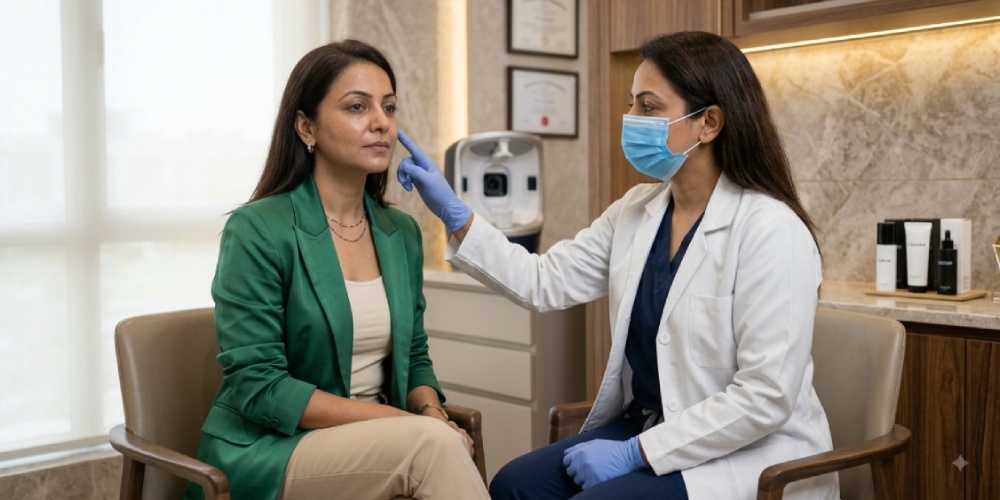
Safe surgery follows a consistent pattern. A qualified surgeon reviews your history and discusses goals honestly including when surgery is not the right answer. A full pre-operative workup is completed. You receive informed consent with time for questions. Surgery is performed in an accredited facility with a qualified anaesthesiologist. Detailed written aftercare is provided. Healing is monitored at structured follow-up appointments.
If any of these steps are skipped or rushed, that is a warning sign regardless of the procedure or the price.
Types of Plastic Surgery Commonly Performed in India
India's leading clinics offer a full spectrum of procedures, including:
- Facial procedures — rhinoplasty, facelift, eyelid surgery, brow lift, chin augmentation, and ear correction.
- Body contouring — liposuction, tummy tuck, arm lift, thigh lift, and body lift post weight loss.
Cost of Plastic Surgery in India
India's pricing is one of its most compelling advantages. Here is a general guide:
| Procedure | Approximate Cost |
| Rhinoplasty | Rs. 80,000 – Rs. 2,50,000 |
| Facelift | Rs. 1,50,000 – Rs. 4,50,00 |
| Liposuction (per area) | Rs. 60,000 – Rs. 2,00,000 |
| Tummy Tuck | Rs. 1,20,000 – Rs. 3,00,000 |
| Hair Transplant (FUE | Rs. 40,000 – Rs. 1,50,000 |
| Gynecomastia Surgery | Rs. 50,000 – Rs. 1,50,000 |
| Breast Augmentation | Rs. 1,50,000 – Rs. 3,50,000 |
Prices vary by city, clinic, and surgeon experience. Always obtain an itemised quote covering surgeon fees, anaesthesia, facility charges, and post-operative care.
Who Should Consider Plastic Surgery in India?
Plastic surgery in India is appropriate for patients who have researched both the procedure and the provider, are in good general health, hold realistic expectations, and have chosen their surgeon on qualifications and outcomes rather than price.
It requires more careful consideration for patients with:
- Significant medical conditions such as uncontrolled diabetes, heart disease, or clotting disorders
- Plans for multiple simultaneous procedures without understanding cumulative risk
- Unrealistic expectations or primarily external motivation for surgery
- Unwillingness to follow pre- and post-operative instructions carefully
Expert Advice: What Every Patient Should Know
Verify your surgeon's qualifications specifically. An MBBS alone is not sufficient for plastic surgery. Look for MCh or DNB in Plastic Surgery. Check the NMC register if needed, and look for membership of APSI or IAAPS as a mark of peer recognition.
Choose an NABH-accredited facility. Accreditation is not a guarantee of perfection, but it is a meaningful indicator that the facility meets established safety, hygiene, and quality standards.
Meet your surgeon before committing not just the coordinator. Your consultation should be with the operating surgeon, not a marketing representative. If the person handling your booking cannot give you direct access to the surgeon for a pre-procedure discussion, that is a warning sign.
Ask about anaesthesia. Confirm that a qualified, specialist anaesthesiologist will be present throughout your procedure not just a general practitioner administering sedation.
Be honest about your health history. Withholding information about medications, past surgeries, or medical conditions to speed up the approval process puts you at genuine risk. A good surgeon needs the full picture.
Understand the aftercare plan before surgery. Know exactly what to expect during recovery, what is normal, what requires urgent attention, and how to reach your surgical team at any time. If a clinic cannot clearly answer these questions, look elsewhere.
Don't let price be the deciding factor. The consequences of a poorly performed procedure both physical and emotional are far more costly than the savings from choosing an underqualified provider. The right question is not "who is cheapest?" but "who is most qualified to do this safely?"
Frequently Asked Questions
Is it safe to travel to India for cosmetic surgery?
Yes, provided you choose a qualified surgeon at an accredited facility and allow adequate recovery time before travelling home. Most complications arise in the first two weeks rushing home immediately after surgery is not advisable.
How do I verify a surgeon's credentials?
Check the NMC register for their medical licence, confirm their MCh or DNB in Plastic Surgery, and look for APSI or IAAPS membership. Reputable surgeons are transparent about their credentials.
What is the difference between a cosmetic surgeon and a plastic surgeon?
In India, "cosmetic surgeon" is not a protected title any qualified doctor can use it. A plastic surgeon holds an MCh or DNB specifically in Plastic Surgery, requiring years of specialist surgical training. For any significant procedure, always choose a qualified plastic surgeon.
What should I do if something goes wrong after surgery?
Contact your surgical team immediately. For urgent concerns severe pain, signs of infection, or wound dehiscence seek medical attention without delay. Always obtain your surgeon's emergency contact details before leaving the facility.
Conclusion
Plastic surgery in India is safe when approached with the diligence it deserves. The country's finest surgeons and hospitals deliver outcomes that stand comparison with the best anywhere in the world. The risk lies not in the country, but in the decision-making process: choosing on price, skipping verification, rushing into surgery, or underestimating aftercare.
Patients who research carefully, verify credentials, ask the right questions, and commit fully to recovery consistently report excellent outcomes. The foundation of a safe result is always an informed patient working with a qualified, honest surgeon.
We'd be glad to answer your questions, verify our credentials, and guide you through every stage of the process with transparency and care.