Introduction
The belly is the number one area patients ask about in a liposuction consultation and the area surrounded by the most confusion and persistent myths. Can liposuction remove all your belly fat? Will it last forever? Is it the shortcut to a flat stomach that diet and exercise couldn't deliver?
These are fair questions, and they deserve straight answers. In this blog, we separate the myths from the facts so you can make an informed decision with genuinely realistic expectations.
What Is Liposuction, and What Does It Do?
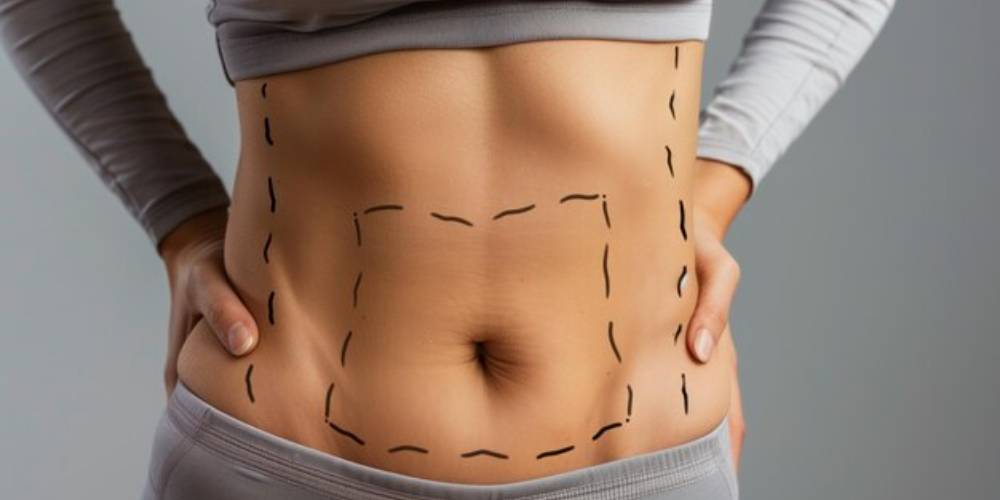
Liposuction is a surgical body-contouring procedure that removes fat cells using a thin tube called a cannula. Applied to the abdomen, it reshapes and flattens the belly by removing subcutaneous fat the fat that sits beneath the skin.
It is not a weight-loss procedure. It is a precision contouring tool. Patients close to their ideal body weight with stubborn, localised abdominal fat that resists diet and exercise benefit most. The goal is a smoother, flatter silhouette not a dramatic change on the scales.
Understanding Belly Fat: The Two Types That Matter
Not all belly fat is the same and this distinction is one of the most important facts in the liposuction conversation.
Subcutaneous fat sits just beneath the skin it's the fat you can pinch. This is what liposuction targets and removes.
Visceral fat sits deeper in the abdomen, surrounding the internal organs. It cannot be removed surgically and responds only to diet, exercise, and lifestyle change.
A patient with predominantly visceral fat may have a firm, protruding belly that liposuction will not significantly flatten, even after fat is removed from the subcutaneous layer. An honest surgeon will assess this at consultation and set expectations accordingly.
Myths vs Facts: Setting the Record Straight
Let's address the most common misconceptions directly.
MYTH: Liposuction can remove all belly fat.
FACT: Liposuction removes subcutaneous fat only it cannot touch visceral fat, which lies deeper around the organs. Surgeons also deliberately leave a thin, even layer beneath the skin to ensure a smooth result. Complete removal would cause uneven, dimpled skin. A good outcome is a significant reduction, not total elimination.
MYTH: Liposuction is a permanent, no-maintenance solution.
FACT: The removed fat cells are gone permanently. However, remaining fat cells in the abdomen can still expand with weight gain. Patients who maintain a stable weight enjoy long-lasting results; significant weight gain will gradually diminish them. Liposuction is a head start, not a free pass.
MYTH: Liposuction will give me a flat, toned stomach.
FACT: Liposuction removes fat it does not build muscle or tighten skin. If you have loose or excess skin from weight loss or pregnancy, liposuction alone will not address this and may make skin laxity more visible. A tummy tuck (abdominoplasty), alone or combined with liposuction, is typically the more appropriate solution.
MYTH: Liposuction results appear immediately.
FACT: You will notice a change immediately, but significant swelling in the early weeks masks the true result. Most patients see a clearer picture at three months; final results settle at around six months. Patience is essential.
Benefits of Abdominal Liposuction
When performed on the right patient with realistic expectations, abdominal liposuction offers real benefits:
Targeted fat reduction in the upper and lower abdomen, flanks, and waist — areas notoriously resistant to exercise.
Improved body proportions — a slimmer waist significantly enhances overall figure balance, even without dramatic weight change.
Long-lasting contouring — with a stable lifestyle, results can last a decade or more.
Motivational boost — many patients find visible results inspire healthier habits, which in turn protects the outcome.
Combinable with other procedures — frequently performed alongside a tummy tuck for patients needing both fat removal and skin tightening.
How Abdominal Liposuction Works: Step by Step
- Consultation — The surgeon maps and assesses abdominal fat, checks skin quality, and discusses goals honestly.
- Anaesthesia — General anaesthesia or sedation, depending on the volume treated.
- Tumescent solution — A saline and anaesthetic mix is injected to minimise bleeding and ease fat removal.
- Cannula insertion — Small incisions allow the cannula to loosen and suction fat in a controlled, layered technique.
- Compression garment — Applied immediately to support healing and shape the new contour.
- Recovery — Desk work within one week; strenuous exercise at six weeks; final results visible at six months.
Types of Liposuction for the Abdomen
Tumescent Liposuction — the gold standard; safe and well-proven for abdominal contouring.
VASER Liposuction — ultrasound energy selectively loosens fat before removal; ideal for denser areas and high-definition results.
Laser-Assisted Liposuction — offers mild skin-tightening in addition to fat removal; useful for patients with minor laxity concerns.
Liposuction with Tummy Tuck (Abdominoplasty) — for patients with both excess fat and loose or stretched abdominal skin, addressing the full picture in a single operation.
Advantages and Disadvantages
Advantages:
- Permanently removes subcutaneous fat cells from the abdomen
- Visible reshaping with minimal, discreetly placed scarring
- Can address upper abdomen, lower abdomen, and flanks in one procedure
Disadvantages / Risks:
- Cannot remove visceral belly fat
- Temporary swelling, bruising, and numbness during recovery
- Results can be affected by significant post-surgery weight gain
- Risk of contour irregularities if over-treated
- Does not address loose skin a tummy tuck may be needed alongside
Cost of Abdominal Liposuction
Cost depends on how many zones are treated (upper abdomen, lower abdomen, flanks), the technique used, surgeon's experience, and location. Prices in India are considerably lower.
Always prioritise skill and credentials over price. In body contouring, an uneven or over-aggressive result is difficult and costly to correct.
Who Is a Good Candidate?
Abdominal liposuction is well-suited to patients who:
- Are within approximately 20–30% of their ideal body weight
- Have subcutaneous belly fat that doesn't respond to diet and exercise
- Have reasonably good skin elasticity, allowing smooth contraction after fat removal
- Are non-smokers (or willing to stop around surgery)
- Understand the distinction between subcutaneous and visceral fat
It is not ideal for patients who are significantly overweight, have predominantly visceral fat, have loose skin they don't wish to address surgically, or expect liposuction to function as a weight-loss procedure.
Tips and Best Practices
Understand your fat type before booking. A surgeon who tells you honestly if visceral fat is the dominant issue is one you can trust. Be cautious of clinics that promise a flat stomach without proper assessment.
Don't use liposuction as a starting point for weight loss. The best results come from patients already close to their goal weight. Gaining weight after surgery gradually diminishes the result.
Maintain results with lifestyle. Stable weight, regular exercise, and a balanced diet are the most reliable way to protect your investment long-term.
Be patient. Judging your result at four weeks, when swelling is still significant, is premature. Give it six months before assessing the full picture.
Consider combination procedures if skin is loose. Liposuction alone won't address skin laxity a tummy tuck may be needed to complete the result.
Frequently Asked Questions
Can liposuction get rid of a belly pouch after pregnancy?
If the pouch is primarily fat, liposuction can help. However, pregnancy often causes muscle separation (diastasis recti) and loose skin — neither of which liposuction addresses. A tummy tuck is often more appropriate, either alone or combined with liposuction.
Will belly fat come back after liposuction?
The removed fat cells do not return. However, remaining cells in the abdomen can expand with weight gain. Patients who maintain a stable weight enjoy long-lasting results.
How much fat can be safely removed in one session?
Most surgeons follow guidelines of no more than 5 litres per session for safety. The goal is natural-looking contouring, not maximum extraction.
Can exercise replace liposuction for belly fat?
Exercise reduces overall body fat but cannot target specific areas. For stubborn, localised subcutaneous fat that persists despite a healthy lifestyle, liposuction offers a precision that exercise simply cannot match.
Conclusion
Liposuction is genuinely effective at removing stubborn subcutaneous belly fat and reshaping the abdomen but it is not a magic solution and not a replacement for a healthy lifestyle. Understanding the difference between subcutaneous and visceral fat, knowing what surgery can and cannot address, and setting realistic expectations are the foundations of a satisfying result.
The patients most satisfied after abdominal liposuction are those who came in informed, chose their surgeon carefully, and committed to maintaining their results. If that sounds like you, a consultation is the natural next step.
We'd be glad to give you an honest assessment of what's possible.